Why your chai timing matters more than what's in your chai
If Timiya could change exactly one habit across Kenyan households and nothing else, it would be this: stop drinking chai with your meal. Not because chai is bad — because timing it wrong quietly cancels out a big share of the iron you just ate.
The chemistry in one sentence
Chai is black tea, and black tea is loaded with tannins — polyphenolic compounds that bind to iron in your gut and form a compound your body can't absorb. This isn't a folk theory. Hurrell's foundational work on polyphenolic beverages and iron absorption found that tea taken with a meal can reduce non-heme iron absorption by 60-70%, and the effect scales with how strong the tea is and how close to the meal you drink it. Kenyan chai — brewed strong, with milk, often several cups — sits at the high-tannin end of that range.
What this looks like on a real plate
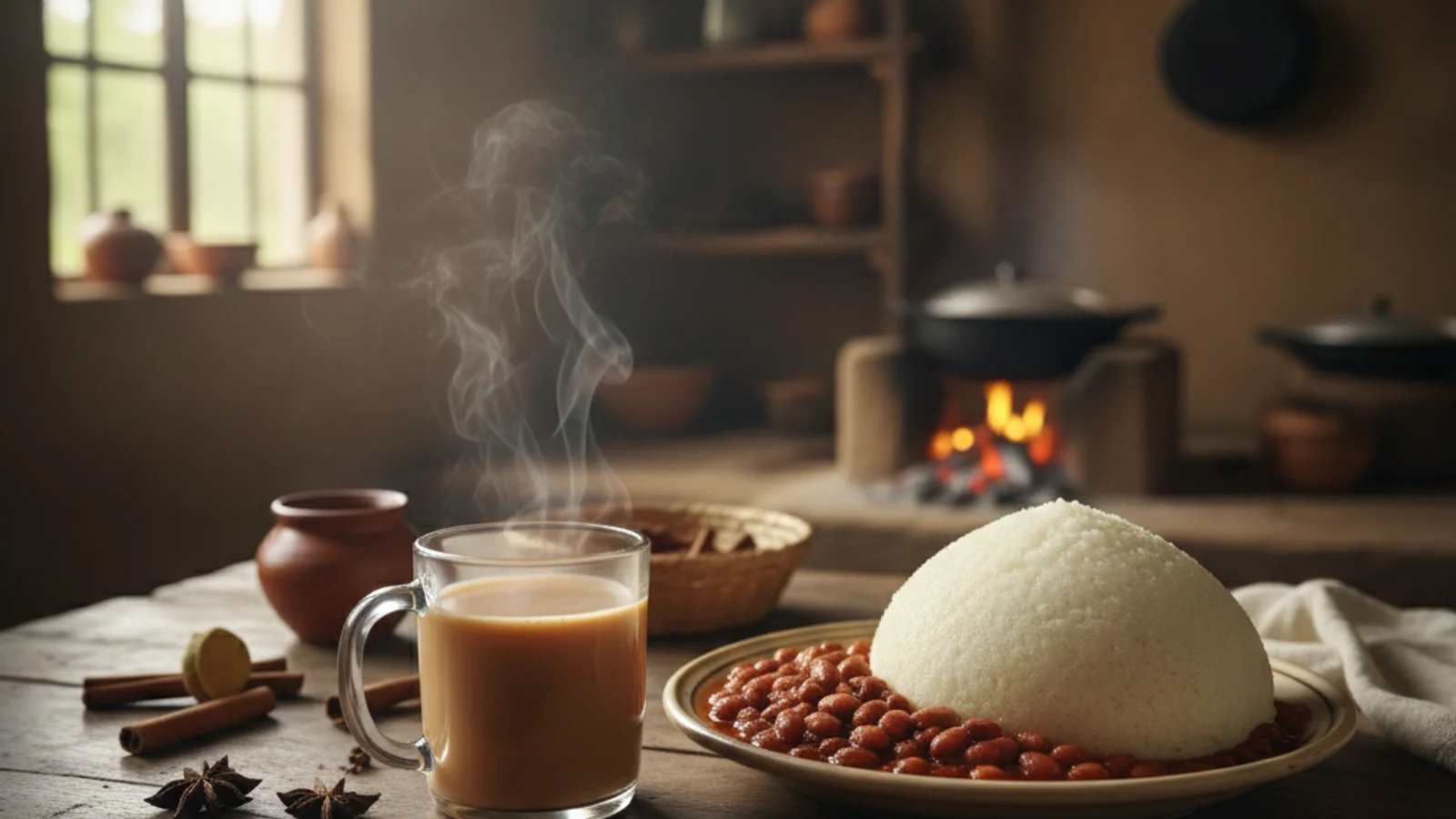
Picture a typical Kenyan lunch: githeri or beans and ugali, maybe some sukuma wiki, and a mug of chai to finish. That plate might carry 6mg of iron from the beans and greens combined — a solid contribution toward your daily need. Now the timing question:
Chai with lunch: Tannins bind a large share of that iron in your gut before it's absorbed. Instead of 6mg reaching your blood, you're realistically looking at under 2mg — much of the meal's iron leaves the way it came in.
Chai two hours after lunch: By then, the iron from your meal has already moved through the absorption window in your small intestine. The tannins arrive too late to interfere. You keep close to the full absorbable share of that 6mg.
That's roughly a 3x difference in what reaches your blood — from the exact same lunch, the exact same chai, at the exact same cost. This is why Timiya calls it the highest-impact free change we recommend: it costs nothing, requires no new food, and changes nothing about what you already eat. It only changes when.
The simple fix
Move chai to at least one hour after your main meal — two hours is better if your schedule allows it. In practice:
- Breakfast chai on its own, without a heavy iron-rich food alongside it, is fine — there's little iron in the meal for the tannins to compete for.
- Lunch chai should wait. Have your water or nothing at the table, and take chai as a 4pm break instead.
- If chai is a social ritual you're not willing to move, at minimum separate it from your highest-iron meal of the day — usually the one with beans, meat, or dark greens.
Other enhancers worth stacking
Timing is the single biggest lever, but it's not the only one. Vitamin C — from a slice of lemon, a tomato-based stew, or a piece of orange after the meal — can increase non-heme iron absorption by 2 to 6 times on its own, and it stacks with good timing rather than replacing it. Meat, fish, and omena also carry a "meat factor" that modestly improves iron absorption from the plant foods eaten alongside them. None of these enhancers undo the damage of tannins taken at the same sitting — they add on top of a meal that's already timed right.
The takeaway
The iron in your beans, greens, and meat doesn't change based on when you drink chai — but how much of it your body actually keeps does. Push your chai to an hour or two after eating, add a squeeze of lemon to your greens or stew, and you've made your existing meals meaningfully more nutritious without spending a single extra shilling.
Sources
- Soy protein, phytate, and iron absorption. American Journal of Clinical Nutrition (1992). DOI
- Inhibition of iron absorption by polyphenolic-containing beverages. British Journal of Nutrition (1999). DOI
- Guideline: Fortification of food-grade salt with iodine and other micronutrients. WHO/FAO Bioavailability Guidance (2009)
Get nutrition insights like this in your inbox