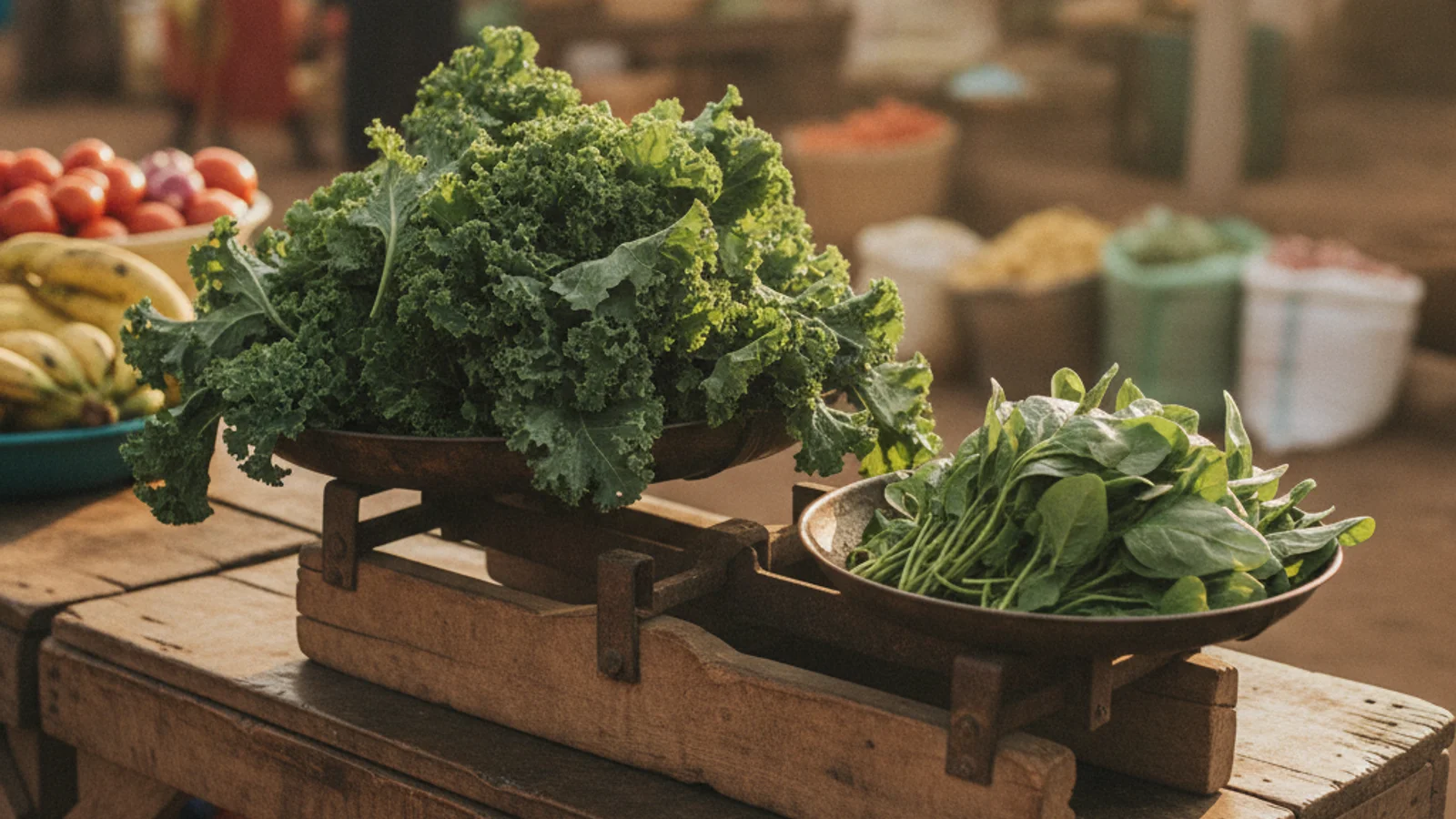
Sukuma wiki vs spinach: the calcium question
Spinach has a reputation as the calcium green — thank Popeye, thank supermarket marketing, thank decades of nutrition labels that only ever print total content. But total content is the wrong number to look at. What matters is what your body actually absorbs, and on that measure, Sukuma wiki — Kale beats spinach by a wide margin.
The number that matters
Spinach does carry a respectable amount of calcium on paper — often quoted around 99mg per 100g. But spinach is also extremely high in oxalates, compounds that bind calcium into an insoluble form your gut can't absorb. The result: only about 5% of spinach's calcium ever reaches your blood. The other 95% passes through, unused, regardless of how much spinach you eat.
Sukuma wiki has less oxalate and a gut chemistry that lets far more of its calcium through — roughly 49% absorption, among the highest of any leafy green studied. That's nearly ten times the absorption rate of spinach, gram for gram of calcium.
Why oxalates matter more than totals
Oxalic acid occurs naturally in many vegetables, but the amount varies enormously by species — spinach is one of the highest oxalate foods commonly eaten, alongside foods like rhubarb and beet greens. When oxalate binds calcium in your gut, it forms calcium oxalate, a compound your intestine simply cannot absorb. It's the same chemistry, incidentally, behind most kidney stones — high-oxalate diets are a known risk factor.
Brassica vegetables — the family sukuma wiki belongs to, along with cabbage and broccoli — are naturally low-oxalate. That single trait is why a Brassica green with modest total calcium can out-deliver a spinach-family green with more calcium on the label. Content tells you what's on the plate. Absorption tells you what's in your blood. They are not the same number, and for calcium the gap is unusually large.
Which Kenyan greens rank best
Among greens commonly found in Kenyan markets:
- Sukuma wiki (kale): low oxalate, ~49% calcium absorption — the standout choice.
- Cabbage: similarly low-oxalate, good absorption, lower calcium density than sukuma wiki.
- Managu (African nightshade) and terere (amaranth): moderate oxalate, absorption somewhere between sukuma wiki and spinach — still solid choices, worth rotating in.
- Spinach (mchicha wa kizungu): high oxalate, ~5% absorption — fine as an occasional green, poor as a calcium strategy.
The cost comparison
This is the part that should change how you shop. At Nairobi's open-air markets, a bunch of sukuma wiki large enough for a family meal typically runs KES 10-20, while a comparable bunch of spinach — less commonly stocked and often sold as a specialty item — runs KES 30-50 or more. You're not just getting worse calcium absorption from spinach. You're paying two to three times more for it.
Put another way: sukuma wiki is simultaneously the cheapest green in most Kenyan markets and the most bioavailable source of calcium among them. That's a rare alignment — usually you pay more for better nutrition. Here, the budget choice and the science-backed choice are the same plate.
The takeaway
Don't chase spinach because a label says it has more calcium — most of that calcium never reaches your blood. Cook sukuma wiki with your ugali or githeri several times a week, add a bit of oil to help absorb the fat-soluble vitamins it also carries, and you're getting the most bioavailable calcium available in Kenyan markets, at the lowest price on the shelf.
Sources
- Calcium bioavailability from vegetables: a review. Journal of Food Science (1999). DOI
- Oxalate content of foods and its effect on humans. Asia Pacific Journal of Clinical Nutrition (2001)
- FAO/INFOODS Food Composition Table for Kenya. FAO (2018)
Get nutrition insights like this in your inbox