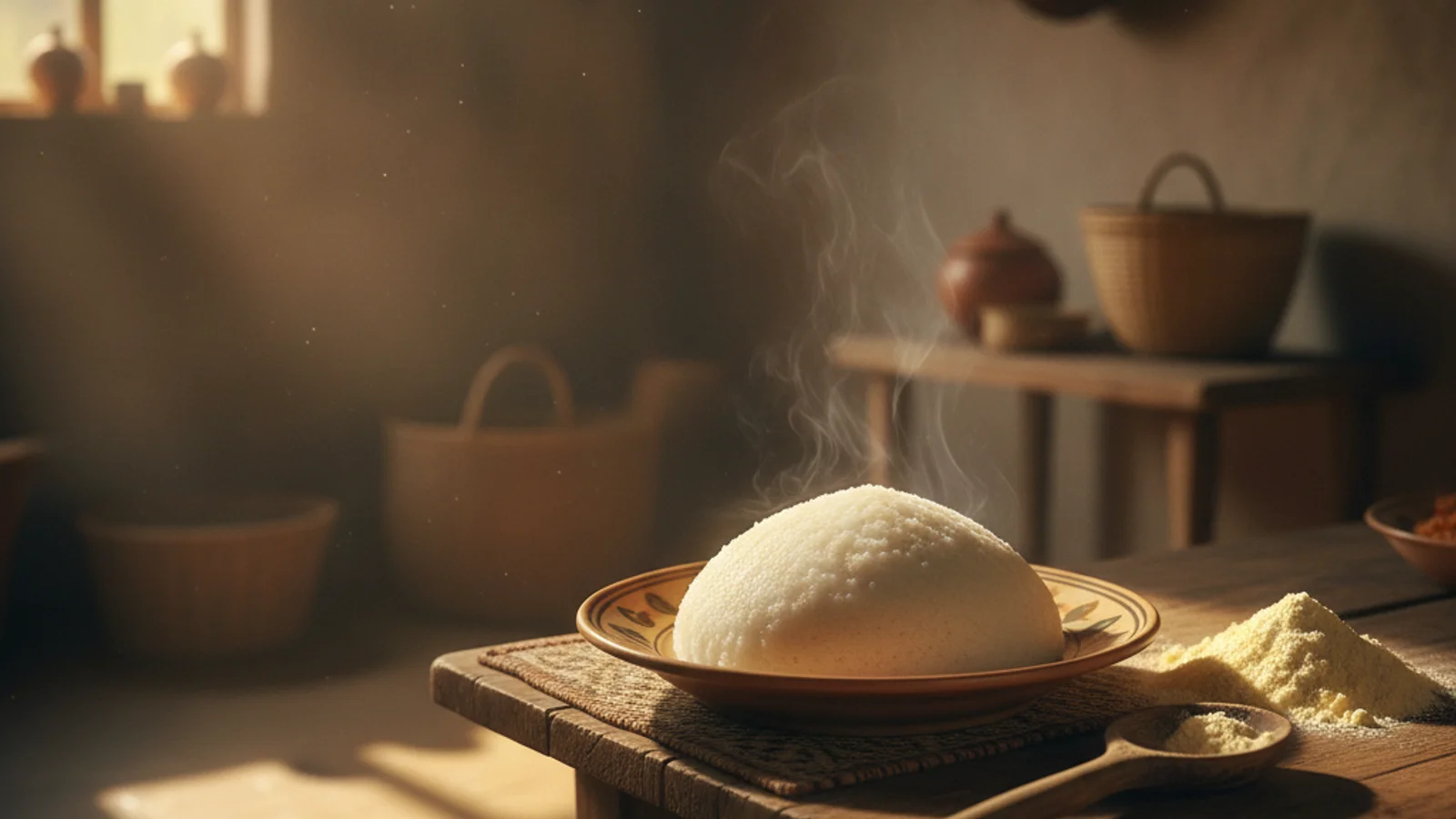
Five things you didn't know about ugali nutrition
Ugali is the food most Kenyans eat most often, and it's also the food most Kenyans think they understand completely. You don't. Here are five things about ugali that change how you should cook it, buy it, and pair it.
1. Not all maize flour is fortified — and the label matters
Since 2012, Kenya has required large millers to fortify maize flour with iron, zinc, folic acid, and vitamins A, B1, B2, B6, and B12. But that mandate applies to commercially milled flour sold in packets — Jogoo, Ndovu, Pembe, and similar brands. It does not apply to flour ground at a local posho mill from maize you brought yourself. If you buy loose flour from a duka or grind your own, you are very likely eating unfortified ugali, full stop. That's not a small gap — posho-milled flour still makes up a meaningful share of what rural and lower-income urban households eat.
2. Fortified flour carries real iron — on paper
A kilogram of fortified maize flour in Kenya is required to carry roughly 15mg of iron, alongside 20mg of zinc, 300mcg of folic acid, and smaller amounts of vitamins A and B-complex. That's a substantial amount — more than a day's iron requirement for most adults, packed into flour most households already buy. The fortification premium adds only a few shillings per kilogram. On the label, ugali looks like a quietly excellent source of iron.
3. Phytates cut that number down hard
Here's the catch: maize is naturally high in phytic acid, a compound that binds iron and zinc in your gut and drags them out unabsorbed. Phytates in maize-based staples can reduce non-heme iron absorption by 50% or more, depending on how much phytate survives cooking. So the 15mg of iron on the flour packet doesn't mean 15mg absorbed — it means 15mg present, with your gut fighting phytates for a fraction of it. This is the same reason two people can eat identical ugali and end up with very different iron status: what else is on the plate matters as much as what's in the flour.
4. Fermentation and soaking help, but few households do it
Traditionally fermented maize porridges — uji left to sour overnight — lower phytate content because fermentation activates enzymes that break phytic acid down. Straight ugali, cooked fresh from dry flour with no fermentation step, keeps most of its phytate intact. If you have the time, a naturally soured uji the night before is doing more nutritional work than plain ugali ever will. Most households skip this step because it takes planning, not because it doesn't work.
5. What you eat ugali with decides how much iron you keep
This is the part that actually matters for your Sunday lunch. Vitamin C is the single strongest counter to phytate's iron-blocking effect — it can raise non-heme iron absorption by 2 to 6 times, even in a phytate-heavy meal. Practically, that means:
- Ugali with sukuma wiki and a squeeze of lemon absorbs meaningfully more iron than ugali with sukuma wiki alone.
- Ugali with a tomato-onion base (nyanya has some vitamin C) does slightly better than ugali with just meat.
- Ugali with chai during the meal works against you — tannins in tea bind iron even harder than phytates do, and the two effects stack.
None of this means avoid ugali. It means treat the plate, not the flour bag, as the unit that decides your iron. Fortification gives you a baseline. What sits next to your ugali — and what you drink two hours later instead of immediately — decides how much of that baseline you actually keep.
The takeaway: buy fortified packet flour when you can, add something with vitamin C to the same plate, and hold your chai until at least an hour after the meal. Same ugali, same cost, meaningfully more iron absorbed.
Sources
Get nutrition insights like this in your inbox