
A bedsitter kitchen in South B
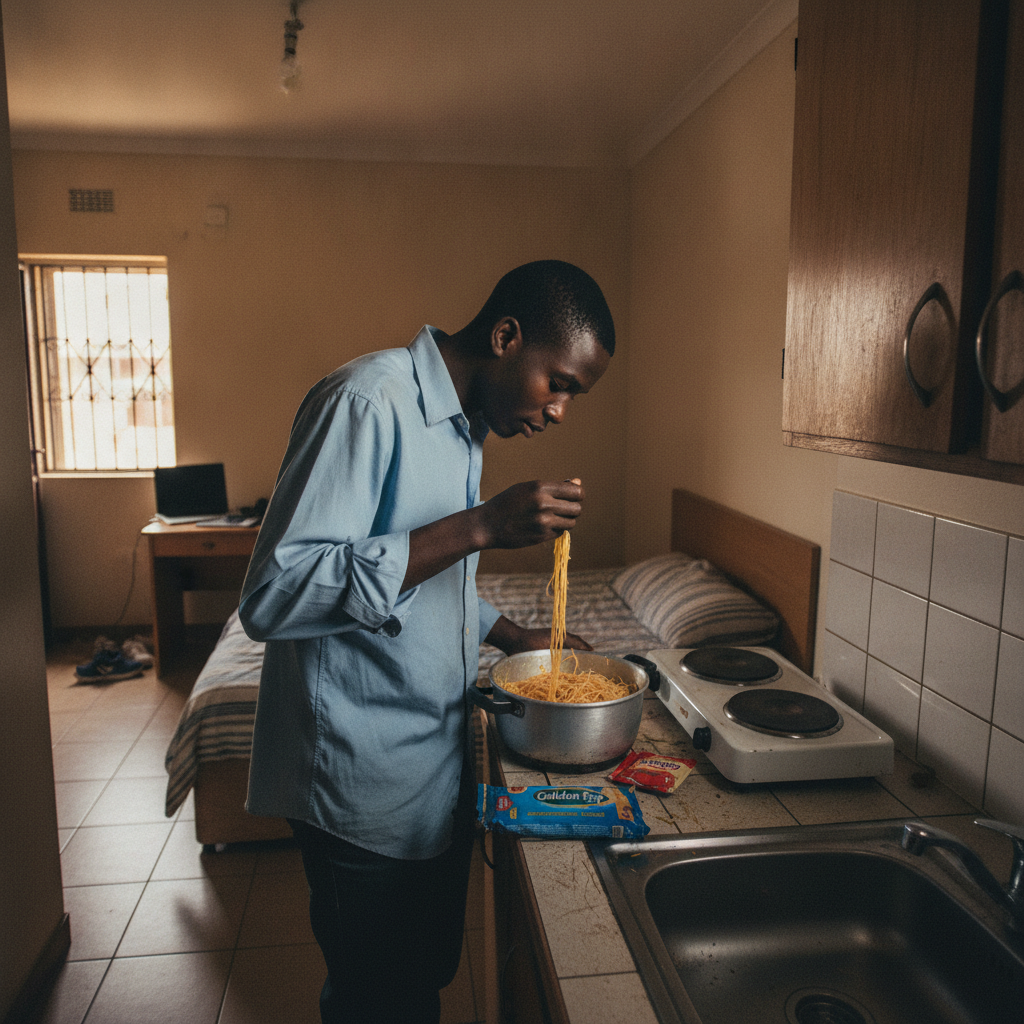
Brian gets home at quarter past eight. The matatu from town to South B took an hour and forty minutes. He drops his bag on the bed -- the bed is three steps from the door, which is four steps from the kitchen counter -- and opens the cabinet. There is a packet of spaghetti, half a loaf of bread, four eggs, a tin of cooking oil, and an onion going soft. He boils the spaghetti, fries the onion in oil, adds tomato sauce from a sachet. He eats standing at the counter because the only chair is at his desk and moving it feels like effort. This is Tuesday. Monday was eggs and bread. Sunday was the same spaghetti. Saturday was fried chicken from Glovo -- KES 450 he will not remember spending when he checks his M-Pesa statement at the end of the month.
His bedsitter kitchen is a counter along one wall: a sink, two cabinets, a power socket for a single hot plate. No oven. No fridge. The sukuma wiki he bought on Saturday wilted by Monday in Nairobi's heat. He threw it away. He has four meals in rotation: eggs and bread, spaghetti with tomato sauce, ugali and sukuma wiki when he buys it fresh, and instant noodles when he cannot face any of the other three. At the kibanda near his office, he eats ugali or rice with beans and sukuma for KES 100-150. His daily food spend -- KES 200-400 across chai and mandazi in the morning, the kibanda at lunch, and whatever he scrapes together at night -- adds up to KES 6,000-12,000 a month. He does not track it. He does not notice until the money is gone.
Brian knows he should eat better. He has known this in a vague, distant way since university, where the same meals followed him from the hostel to this bedsitter. What he does not know is that his Indomie-and-chai dinners are the worst nutritional combination in his rotation -- 1,500mg sodium and tannin-blocked iron from the fortified wheat, delivering the nutritional equivalent of flavored salt water with caffeine. He does not know that the cabbage on his kibanda rice plate contributes almost nothing -- asking for kachumbari instead, at the same price, would add 15-25mg of vitamin C that doubles iron absorption from both the rice and the beef sauce. He does not know that the pilau-and-mala he treats himself to on Sundays is fighting itself -- the 300mg of calcium in the mala blocks 30-50% of the iron in the pilau, but drinking the mala two hours apart would let his body absorb both.
Brian is not lazy or careless about food. He is a young professional earning his own money for the first time, cooking on a single burner in a room with no fridge, getting home after dark with no energy left. He is not doing anything wrong. He is missing one piece of information: what his body actually gets from the four meals he already knows how to make, and what one small change would give it more.
“By the time I get home, I just want to eat and sleep. I know it is not good, but I don't know what else to do with what I have.”
— A young man living alone in Nairobi
Sound familiar?
You have eaten the same four meals on rotation since university and nothing has changed except your address. You have never thought to ask for kachumbari instead of cabbage at the kibanda -- they cost the same, but only one of them helps your body absorb the iron on the plate. You have paired pilau with mala on Sundays not knowing the calcium was fighting the iron. You have checked your M-Pesa statement and wondered where KES 8,000 went, then realized it was all food.
You are not doing anything wrong. You are missing one thing: a way to see what your meals are actually giving your body, and one change that works in a bedsitter kitchen with one burner and no fridge.
Same bedsitter, different Tuesday
Brian opens Timiya and logs what he had today: chai and mandazi for breakfast, rice and beef with cabbage at the kibanda for lunch, Indomie and chai for dinner. The score comes back: 22. The app breaks it down -- his breakfast is a triple lock against iron absorption (tea tannins, milk calcium, bread phytates all blocking the fortified flour). His lunch has the right ingredients but the wrong side dish. His dinner is 1,500mg of sodium with near-zero usable nutrients.
It suggests one swap per meal. Breakfast: eat a guava before the chai -- KES 5, triples iron absorption from the bread. Lunch: ask for kachumbari instead of cabbage -- same price, 15-25mg of vitamin C that doubles iron absorption. Dinner: tear sukuma wiki into the Indomie -- KES 3 and two minutes of cooking.
He tries the lunch swap first because it costs nothing. Logs the day again. The score: 38. He adds the guava the next morning. Score: 47. The sukuma-in-Indomie trick the following evening. Score: 54. Same daily spend. The difference is not cooking skill or willpower. It is knowing which KES 5-10 additions unlock nutrients that were always there but never absorbed.
Your bedsitter kitchen is enough. Start with what you already eat.
Join the waitlist← Back to all profiles